
The ocean glows in places where the world forgets to look.
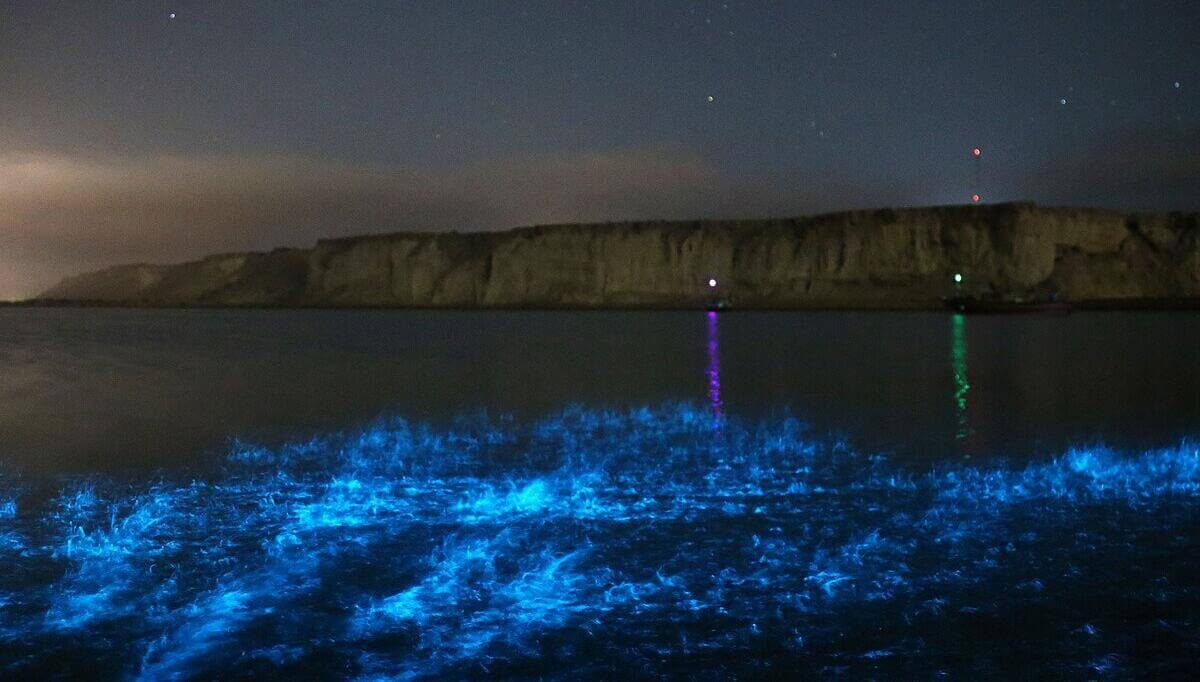
Tiny sparks of blue fire.
Ribbons of neon green.
Clouds of shimmering light that bloom and fade like underwater galaxies.
Bioluminescence is one of nature’s oldest miracles — a language of light spoken by creatures who live in the deepest dark.
But this story isn’t just about beauty.
It’s about resilience.
It’s about survival.
And it’s about how AI is learning from the ocean’s glow to build the future of technology.
🌊Join the Movement
Subscribe to Petal & Pixel for weekly stories about nature, AI, and the future of our planet.

🌿 Light in the Deep — A Survival Strategy, Not Decoration
Bioluminescence isn’t just pretty.
It’s practical.
It’s genius.
Creatures use it to:
attract mates
lure prey
confuse predators
communicate
camouflage
navigate
Firefly squid, lanternfish, comb jellies, glowing plankton — they all use light as a tool.
In the deep sea, light is life.
And humans are finally paying attention.
🌿 Explore the Ocean Series
Dive into the 30 Ways to Protect 30% series and discover how light, sound, and technology shape our oceans.
🤖 How AI Learns from Bioluminescence
Nature has been solving problems for billions of years.
AI is just catching up.
Here’s how the ocean’s glow is inspiring technology:
1. Biomimicry Algorithms
AI models inspired by bioluminescent patterns help:
optimize energy use
improve signal processing
create adaptive lighting systems
design underwater robots
Nature → algorithm → innovation.
2. Light‑Based Sensors
Scientists are developing sensors modeled after glowing plankton that react to movement.
These sensors can:
detect pollution
monitor water quality
track marine life
identify illegal fishing
All inspired by tiny organisms that flash when disturbed.
3. Soft Robotics Inspired by Jellyfish
Bioluminescent jellyfish move with:
minimal energy
maximum efficiency
perfect fluidity
AI‑powered robots now mimic this movement for:
underwater exploration
coral restoration
deep‑sea research
The future of robotics glows.
4. AI‑Enhanced Imaging
Bioluminescent proteins help scientists visualize:
cancer cells
neural pathways
immune responses
AI improves the imaging, making it faster and more accurate.
The ocean’s light is literally saving lives.
🌊 Bioluminescence as a Metaphor for Human Resilience
This is where the story becomes personal.
Bioluminescent creatures glow brightest in the darkest places.
Not because they want to be seen.
But because they need to survive.
It’s a reminder that:
resilience is not loud
strength can be soft
beauty can be functional
light can come from within
The ocean teaches us that glowing in the dark is not a performance — it’s a strategy.
🌿 What YOU Can Do — Real, Fun, Quirky Actions
People love actions they can actually do.
Here are the best ones for this theme:
✨ 1. Adopt a Glow‑in‑the‑Dark Plankton Patch
Yes, this exists.
You can sponsor bioluminescent bay conservation.
🪸 2. Support Coral Restoration Robots
Some projects use AI‑powered robots to plant coral fragments.
You can fund a robot for a day.

🌊 3. Visit a Bioluminescent Beach (Responsibly)
Just don’t touch the plankton.
They’re glowing, not asking for hugs.

🧴 4. Switch to Ocean‑Safe Products
Less chemical runoff = healthier glowing ecosystems.
🐠 5. Learn About Biomimicry
Nature is the best engineer.
AI is just taking notes.
💡 6. Reduce Light Pollution
Even ocean creatures need darkness to glow.
